Case study
Circular Battery Graphite and Graphene, Rotterdam
Turning battery waste into critical raw materials, inside Europe
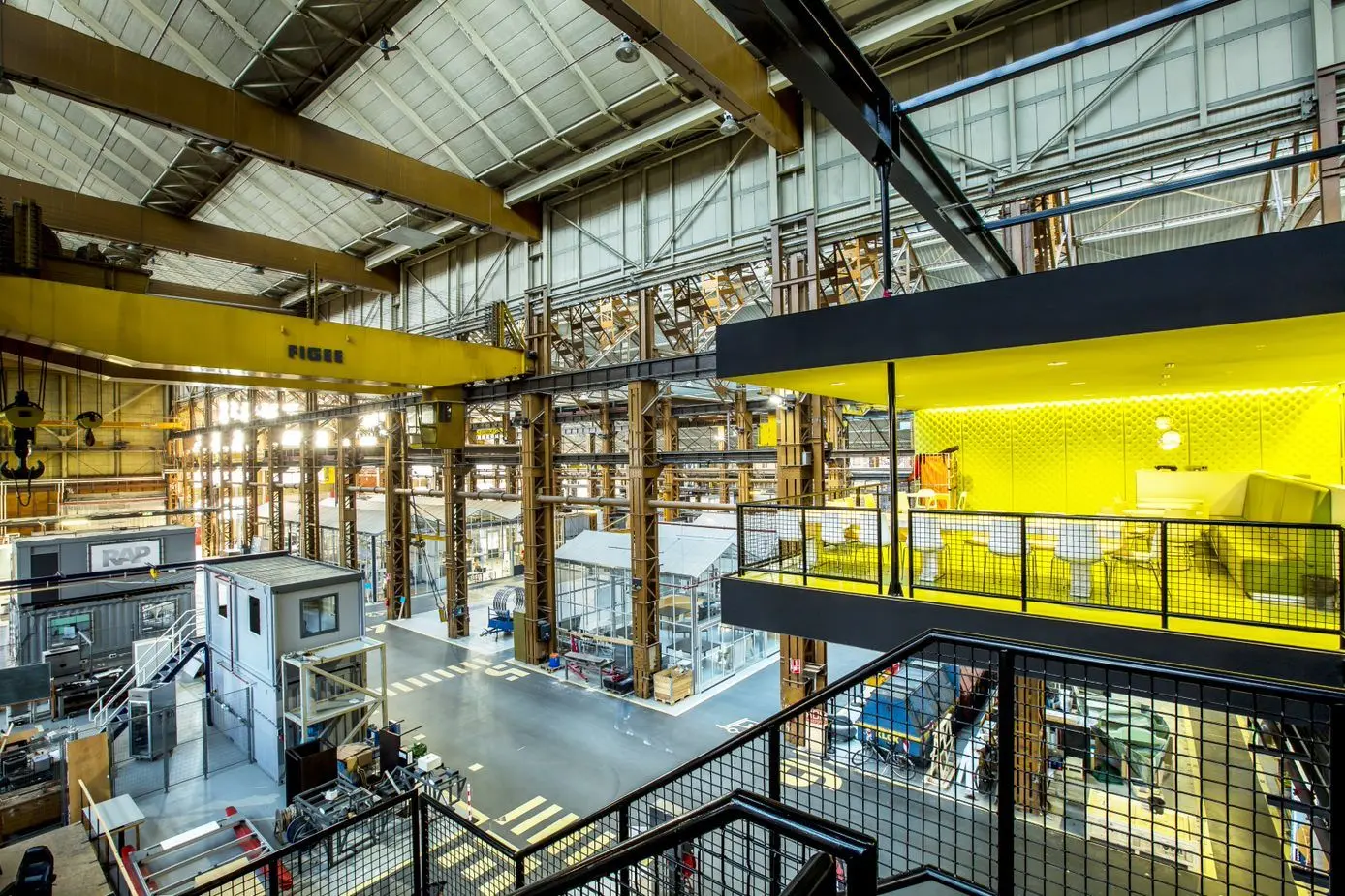
With support from the Just Transition Fund (JTF Groot-Rijnmond) and the Province of Zuid-Holland, Aeroborn is building and scaling its patented electrochemical technology to recover high value carbon materials from battery waste. The project establishes Europe's first industrial pilot line to recover battery grade graphite from recycling waste and to upgrade it into few layer graphene, at RDM Innovation Dock in the Port of Rotterdam.
A critical raw material, recovered in Europe
Graphite is the largest component of a lithium ion battery by mass and is classified as a critical raw material in Europe, yet the continent imports most of what it consumes. Today that graphite is mined or synthesised outside Europe at high energy cost, while large volumes of graphite rich black mass inside Europe are treated as waste and destroyed in conventional recycling.
Recovering graphite from this waste creates a double benefit: it returns a strategic material to the European value chain and replaces energy intensive imported material, reducing emissions on both sides. The process is carbon negative, so growth in battery demand does not have to mean growth in emissions.
The Pilot line
Aeroborn integrates graphite recovery and carbon upgrading into a single industrial line at RDM, connected to the battery recycling cluster and renewable energy infrastructure of the Port of Rotterdam.
Pre-treatment Unit — Selective enrichment of battery black mass, recovering battery grade graphite at high yield with performance matching virgin material, independently verified by Bournemouth University.
Electrochemical Exfoliation Unit — Converting recovered graphite into few layer graphene with high surface area and conductivity, at conditions that preserve the carbon structure rather than destroy it.
Product Validation — Qualification of the recovered materials with OEMs, including electrochemical testing, benchmarking against virgin graphite, and the REACH and battery passport pathway.
Competence Centre — A talent programme with Hogeschool Rotterdam, Technisch College Rotterdam and ROC Zadkine that trains process industry workers for the circular battery value chain, with a blueprint for replication across Europe.
Unlocking new uses for graphene
Recovered as a co-product from a waste feedstock, few layer graphene can be produced sustainably and at lower cost than dedicated synthesis while meeting a consistent specification. Cost and supply have long limited where graphene can be used. A sustainable supply at a workable price expands its reach beyond batteries and supercapacitors into conductive coatings, composites and other advanced materials, all derived from recovered battery waste.
Project Partners
Port of Rotterdam, Bournemouth University and TU Delft (R&D), Hogeschool Rotterdam, Technisch College Rotterdam and ROC Zadkine (talent and training).
This project is co-funded by the European Union through the Just Transition Fund (JTF Groot-Rijnmond) and the Province of Zuid-Holland, supporting a fair transition to a sustainable, circular economy in the Groot-Rijnmond region.